The Quiet Rebellion of Blue Hearts
ドブネズミみたいに美しくなりたい、写真には写らない美しさがあるから。どぶねずみみたいにうつくしくなりたい、しゃしんにはうつらないうつくしさがあるから。Dobunezumi mitai ni utsukushiku naritai, shashin ni wa utsuranai utsukushisa ga aru kara.I want to be beautiful like a sewer rat, because there is a beauty that cannot be captured in a photo.
There’s something almost defiant about watching three teenage girls fumble through punk songs for ninety minutes. Nobuhiro Yamashita’s Linda Linda Linda came out in 2005, a time when Japanese cinema was busy producing somber death studies and elaborate period pieces. Here was something smaller, wetter, and considerably less dignified. It didn’t try to be important. That’s probably why it still matters.
Three Days and Three Songs
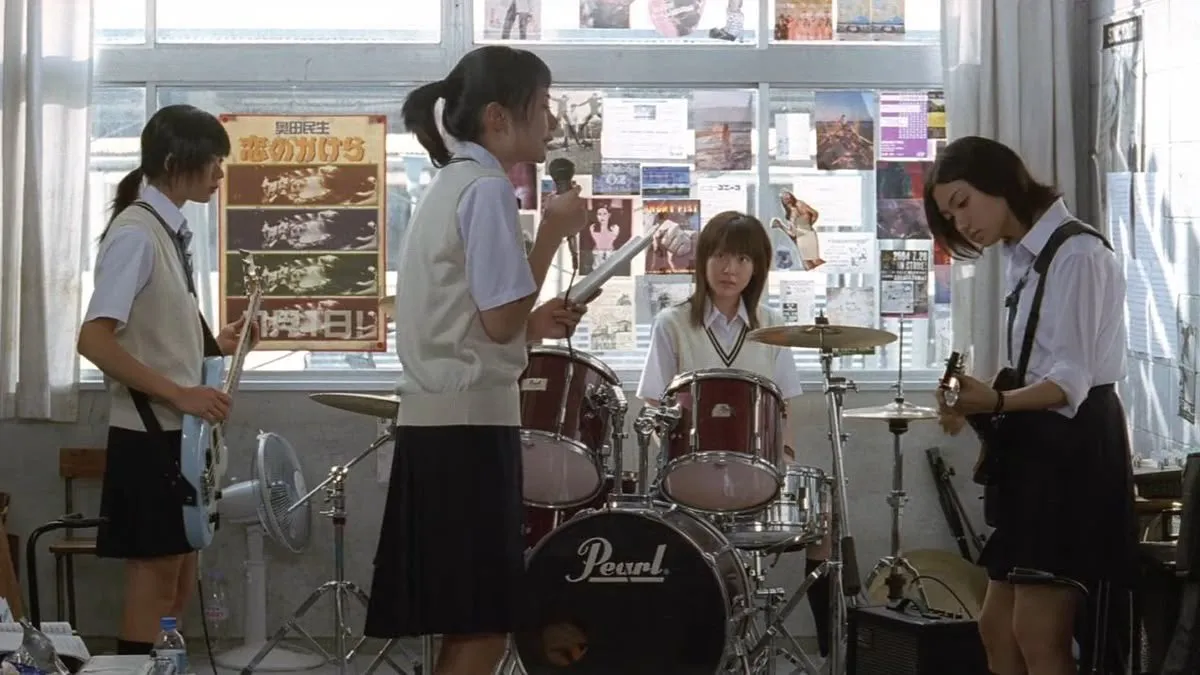
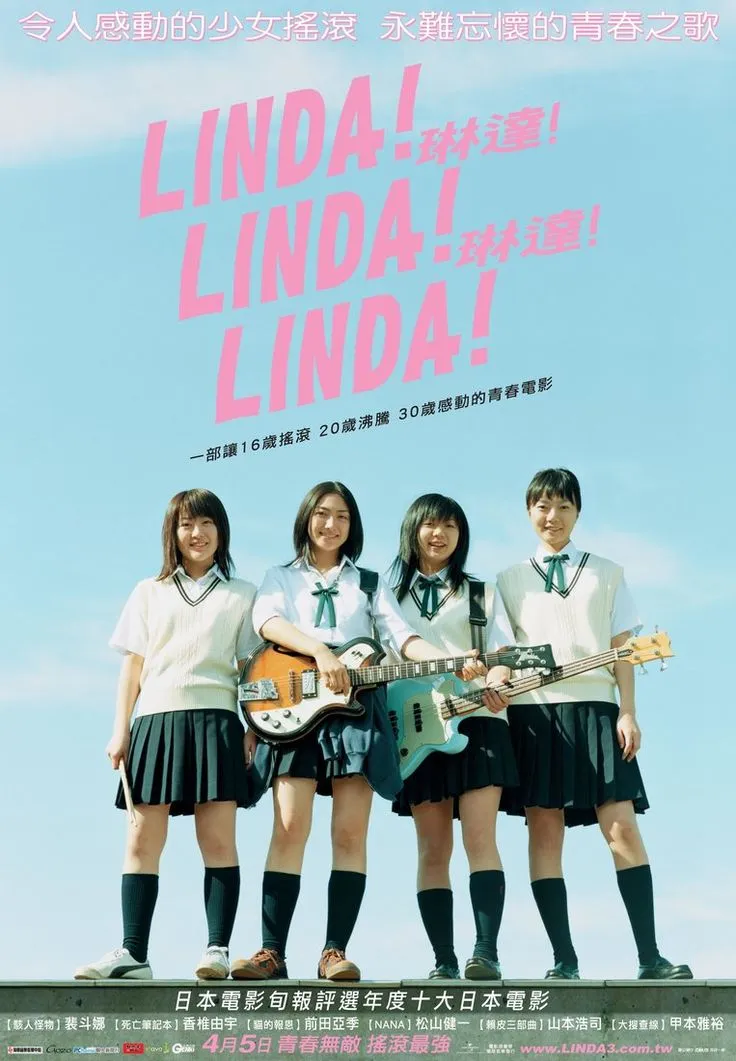
The plot could fit on a postcard. A high school band has three days to prepare for the 文化祭ぶんかさいbunkasaicultural festival. Their singer quit. They find a replacement, Son, a Korean exchange student who speaks Japanese in halting fragments. They have three songs in them, all covers of The Blue Hearts, a real band from the 80s whose energy was rough and urgent and totally unpolished.
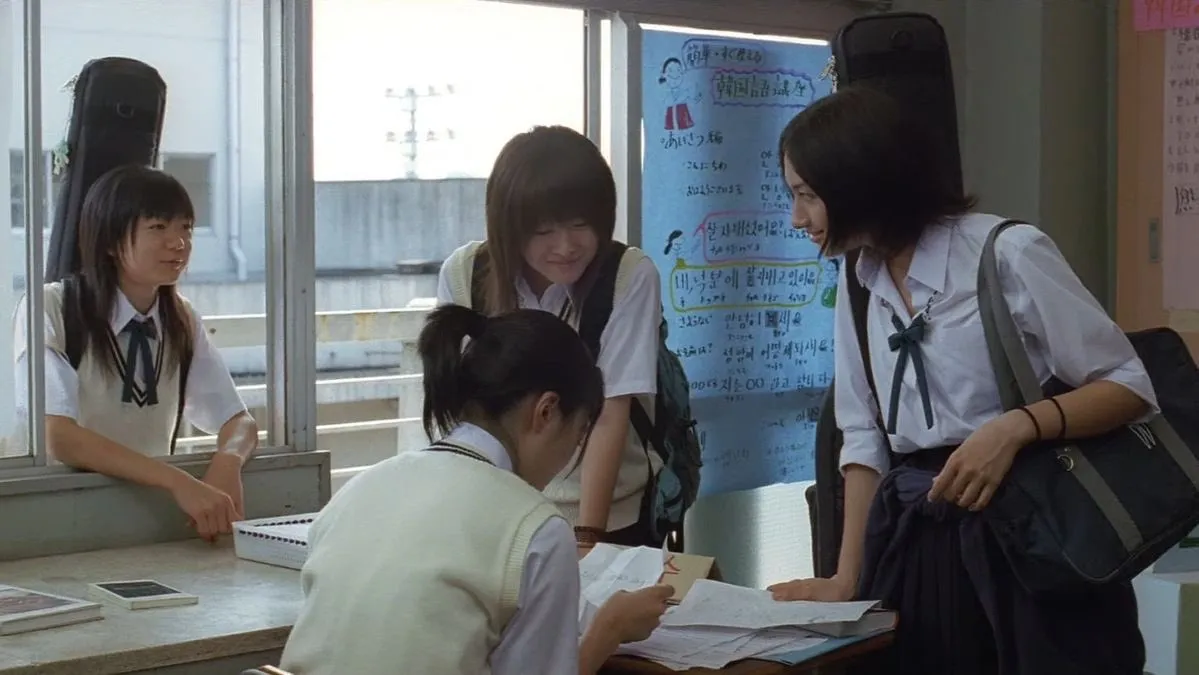
Nothing in this setup suggests greatness. The girls are awkward in ways that feel real, not cinematic. Kei is quiet to the point of invisibility, hiding behind her guitar. Kyoko overcompensates with enthusiasm that barely masks her insecurity. Nozomi moves through the background with a detached, cool observation, the anchor they don’t realize they need. Son navigates everything two steps removed, translating not just language but social cues she can’t quite catch. You recognize these people. You may have been one of them.
Refusing Momentum: Documentary Patience
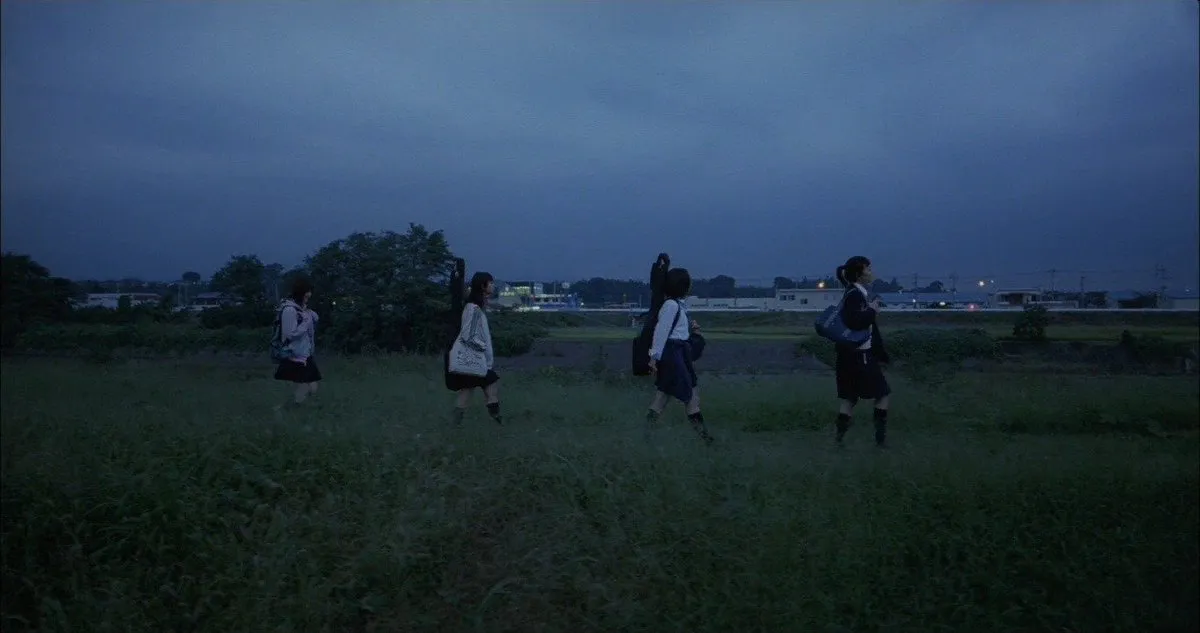
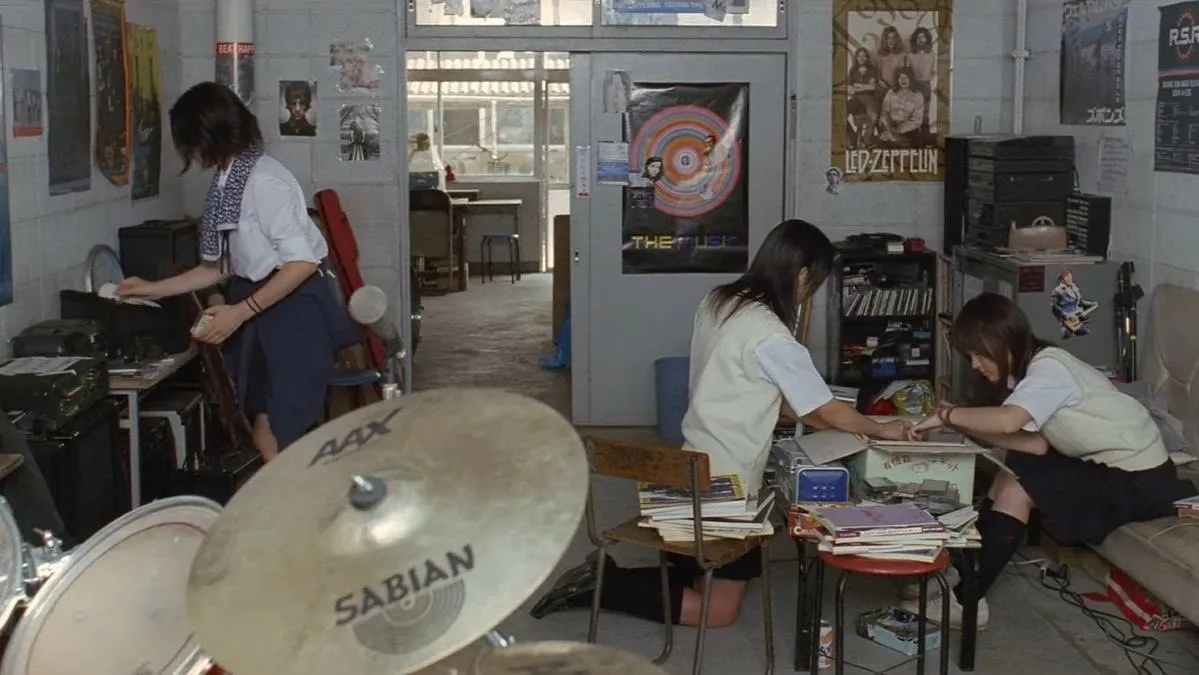
Yamashita shoots this like a documentary crossed with a memory. The camera doesn’t swoop or dramatize. It sits. We watch the girls tune guitars that stay out of tune. We sit through practice sessions where nothing musical happens for long stretches. Someone adjusts a strap. Someone forgets the words. Someone laughs nervously.
This refusal to manufacture momentum is the film’s smartest choice. Most coming-of-age stories cheat. They compress months into montages, skip the boring parts, land you exactly where the emotional payoff waits. Linda Linda Linda makes you sit in the duller moments that actually fill youth. The waiting. The small talk. The way time stretches when you’re nervous and collapses when you’re having fun.
The Beauty That Doesn’t Photograph
Son doesn’t speak Japanese fluently. The film treats this as fact, not metaphor. She struggles. She misreads situations. She answers questions nobody asked her. But something strange happens as the film progresses. The language barrier stops feeling like an obstacle and starts feeling like a doorway.
The four girls don’t become friends through late-night heart-to-hearts or tearful confessions. They become friends through repetition. Through running through the same songs, counting off the same beat, hauling the same equipment. Friendship as muscle memory. You don’t choose your band mates the way you choose confidants. You’re stuck with them, and you make something together whether you feel like it or not.
The quote at the beginning of this review captures something the film gestures toward constantly. There is a kind of beauty that doesn’t photograph well. It lives in the gap between intention and execution, in the mess that professionalism would smooth away. The girls aren’t good yet. They’re getting worse at being bad. It’s uncomfortable and real and exactly what youth feels like from the inside.
Rain as Confinement
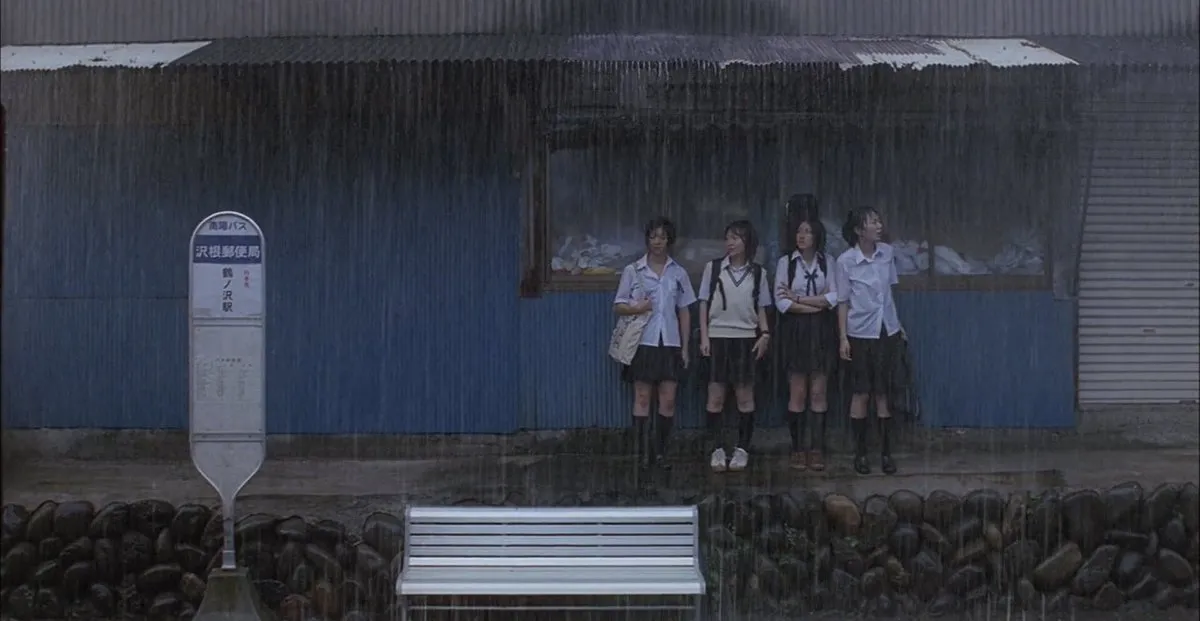
It rains through most of this movie. Not dramatically, not with accompanying thunder and symbolic weight. Just persistent, grey, get-your-shoes-wet rain. Yamashita uses it to keep the girls inside, confined to practice rooms and school hallways, accelerating the 閉塞感へいそくかんheisokukansense of entrapment / claustrophobia that makes their eventual performance feel like an escape.
The rain also makes everything look cheaper. Which is the point. This isn’t a film about dreams coming true or talent being discovered. It’s about showing up wet and tired and playing anyway. The cheapness is the honesty. The Blue Hearts weren’t polished. Their recordings crackle with amateur urgency. The movie inherits that energy, that sense that anyone could do this, and maybe you should.
The Muddy Sound of Enough
The final performance is chaos. They’re drenched. The sound is muddy. People watch half-heartedly before the set ends. If this were a different kind of movie, the crowd would erupt, the girls would hug, and we’d would fade out on the catharsis of finally being seen.
Linda Linda Linda denies you that satisfaction. The performance ends. The girls catch their breath. Life goes on. But something has changed, and the film trusts you to feel it without being told.
This is a movie about what it means to be bad at something, with people you barely know, in a place you’d rather not be, during a rain storm that won’t end. It sounds depressing. It isn’t. It’s very hopeful, because it suggests that you don’t have to be ready. You just have to show up. The songs don’t have to be perfect. They just have to be yours.